Bringing an indoor cat into your home comes with a lot of rewards. They become part of your daily routine, greet you when you wake up, and often claim the best spot on the couch. But indoor cats also have different nutritional needs than cats that spend time outdoors. Since they are usually less active, they can be more likely to gain weight if their diet is not carefully managed.
Many cat parents stand in the pet food aisle feeling overwhelmed by dozens of brands, ingredients, and marketing claims. I remember helping a friend choose food for her indoor tabby after a routine vet visit revealed he had gained several pounds in a year. The packaging all looked impressive, but understanding the nutrition label made the decision much easier.
The good news is that choosing the best cat food for indoor cats does not have to be complicated. Once you know what ingredients and nutrients matter most, you can make confident choices that support your cat’s health, energy, and long-term well-being.
Why Indoor Cats Have Different Nutritional Needs
Indoor cats live a different lifestyle than outdoor cats. They typically spend more time resting, sleeping, and lounging around the house. While many indoor cats enjoy play sessions and climbing cat trees, they generally burn fewer calories throughout the day.
This lower activity level means indoor cats often need:
- Controlled calorie intake
- High-quality protein
- Moderate fat levels
- Healthy fiber sources
- Proper hydration support
Without the right balance, indoor cats may gain excess weight, develop digestive issues, or struggle with hairballs.
According to the Association for Pet Obesity Prevention, excess weight remains one of the most common health concerns among household cats in the United States. Choosing the right food is one of the simplest ways to support a healthy weight.
What to Look For in Cat Food for Indoor Cats
High-Quality Animal Protein
Cats are obligate carnivores, which means they require nutrients found primarily in animal-based proteins.
Look for foods that list recognizable animal proteins near the top of the ingredient list, such as:
- Chicken
- Turkey
- Salmon
- Whitefish
- Duck
Protein helps maintain lean muscle mass, supports energy levels, and keeps cats feeling satisfied after meals.
A good indoor cat food should feature a quality animal protein source as one of its primary ingredients rather than relying heavily on plant-based fillers.
Moderate Calorie Content
Indoor cats typically need fewer calories than highly active outdoor cats.
Check the calorie information listed on the package. Foods specifically formulated for indoor cats often contain fewer calories while still providing complete nutrition.
Pay attention to serving recommendations, but remember they are only starting points. Your cat’s age, activity level, weight, and overall health should guide portion sizes.
Healthy Fiber Sources
Fiber can be especially beneficial for indoor cats.
Appropriate fiber levels may help:
- Reduce hairball formation
- Support healthy digestion
- Promote satiety
- Assist with weight management
Common fiber ingredients include:
- Beet pulp
- Pumpkin
- Pea fiber
- Cellulose
- Psyllium husk
Fiber should support the diet, not dominate it. The goal is balance rather than excessive amounts.
Essential Vitamins and Minerals
A complete and balanced cat food should contain important nutrients such as:
- Taurine
- Vitamin A
- Vitamin D
- Vitamin E
- Calcium
- Phosphorus
- Omega fatty acids
Taurine deserves special attention because cats cannot produce enough of it on their own. This amino acid supports heart function, vision, and overall health.
AAFCO Nutritional Adequacy Statement
One of the most important parts of any cat food package is the nutritional adequacy statement.
Look for wording that indicates the food is:
Complete and balanced for adult maintenance, all life stages, or another appropriate life stage.
This statement helps confirm that the food meets established nutritional standards.
Wet Food vs. Dry Food for Indoor Cats
Many cat owners wonder whether wet or dry food is the better option.
The truth is that both can work well when chosen carefully.
Benefits of Wet Food
Wet food provides:
- Higher moisture content
- Fewer carbohydrates in many formulas
- Strong palatability
- Additional hydration support
Since cats naturally have a low thirst drive, wet food can help support healthy water intake.
Benefits of Dry Food
Dry food offers:
- Convenience
- Easy storage
- Cost effectiveness
- Compatibility with puzzle feeders
Many indoor cats do well on quality dry food when they also have access to fresh water.
The Balanced Approach
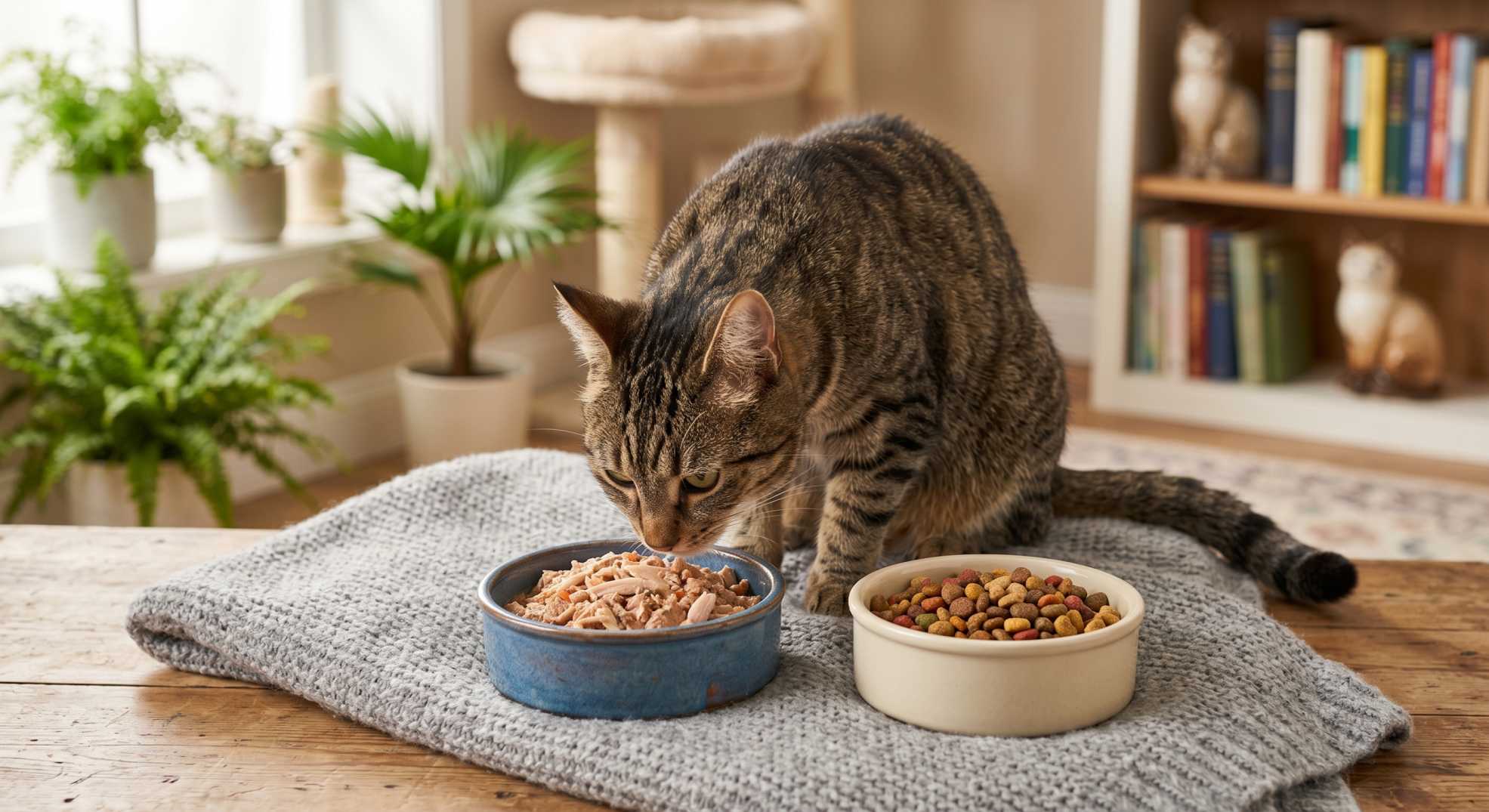
Many veterinarians recommend a combination of wet and dry food. This approach can provide hydration benefits while still offering convenience and variety.
Expert Tip
If your cat rarely drinks water, adding wet food to their daily routine can help support overall hydration and urinary health.
Ingredients Indoor Cat Owners Should Avoid
Excessive Fillers
Not every carbohydrate ingredient is harmful, but foods packed with inexpensive fillers may offer less nutritional value.
Be cautious of formulas where fillers dominate the ingredient list and animal proteins appear much lower.
Artificial Colors
Cats do not care whether their food is red, green, or brown.
Artificial colors exist primarily to appeal to humans rather than cats.
Unclear Ingredient Sources
Transparency matters.
If ingredient labels use vague descriptions without identifying the source, it may be harder to evaluate food quality.
Look for clearly named protein sources whenever possible.
Unrealistic Marketing Claims
Words like:
- Premium
- Gourmet
- Natural
- Super Premium
may sound impressive but do not automatically indicate better nutrition.
Always evaluate the ingredient list and nutritional information rather than relying solely on front-of-package marketing.
Indoor Cat Food and Weight Management
Weight gain can happen gradually.
A few extra calories each day may not seem significant, but over months and years, they can add up.
Signs your cat may be carrying extra weight include:
- Difficulty feeling the ribs
- Reduced activity levels
- Trouble grooming certain areas
- Loss of a visible waistline
Portion control often matters just as much as food quality.
Using a measuring cup and monitoring body condition regularly can help prevent unwanted weight gain.
When to Consider a Special Diet
Some indoor cats may benefit from specialized nutrition.
Examples include:
Hairball Control Formulas
These foods often contain added fiber to help move hair through the digestive system more efficiently.
Sensitive Stomach Formulas
Helpful for cats that experience occasional digestive upset.
Senior Cat Diets
Older cats may have different nutritional requirements that support healthy aging.
Veterinary Therapeutic Diets
Cats with diagnosed medical conditions should follow recommendations provided by their veterinarian.
For cats with medical conditions, nutrition should always be discussed with a veterinarian before making significant dietary changes.
When to Talk to Your Veterinarian
Schedule a veterinary visit if your cat experiences:
- Sudden weight changes
- Frequent vomiting
- Persistent diarrhea
- Loss of appetite
- Increased thirst
- Changes in energy levels
Nutrition plays a major role in health, but it cannot replace professional medical evaluation when symptoms appear.
Frequently Asked Questions
What is the best cat food for indoor cats?
The best cat food for indoor cats contains high-quality animal protein, balanced calories, essential nutrients, and an AAFCO nutritional adequacy statement appropriate for your cat’s life stage.
Should indoor cats eat wet food every day?
Many indoor cats benefit from daily wet food because it helps increase moisture intake and supports hydration.
How many times a day should an indoor cat eat?
Most adult indoor cats do well with two measured meals per day, although feeding schedules may vary based on age, health, and veterinary recommendations.
Is grain-free cat food better for indoor cats?
Not necessarily. Many cats do well on foods that contain grains. The overall nutritional balance and ingredient quality matter more than whether the food is grain-free.
Can indoor cats become overweight on healthy food?
Yes. Even nutritious food can contribute to weight gain if portion sizes exceed your cat’s daily calorie needs.
Final Thoughts
Choosing the best cat food for indoor cats is about more than buying the most expensive bag on the shelf. The right food should provide high-quality protein, balanced nutrition, appropriate calorie levels, and ingredients that support your cat’s unique lifestyle.
Start by reading labels carefully, focus on complete and balanced nutrition, and pay attention to how your cat responds to their diet over time. Small improvements in food quality and portion control can make a big difference in your cat’s long-term health.
A healthy indoor cat is not just happier today. They are also better positioned to enjoy many comfortable years by your side.
Medical Disclaimer: This article is for informational purposes only and should not replace professional veterinary advice. Always consult a licensed veterinarian regarding your cat’s health and nutritional needs.